Module 11
Neurobiology, Physics & Ethics of Sighthounds
10 questions. Progress is saved on this device, so you can leave and return at any time.
Study Material
Use the material below as a foundation for deeper research, then confirm you have read it to begin the assessment.
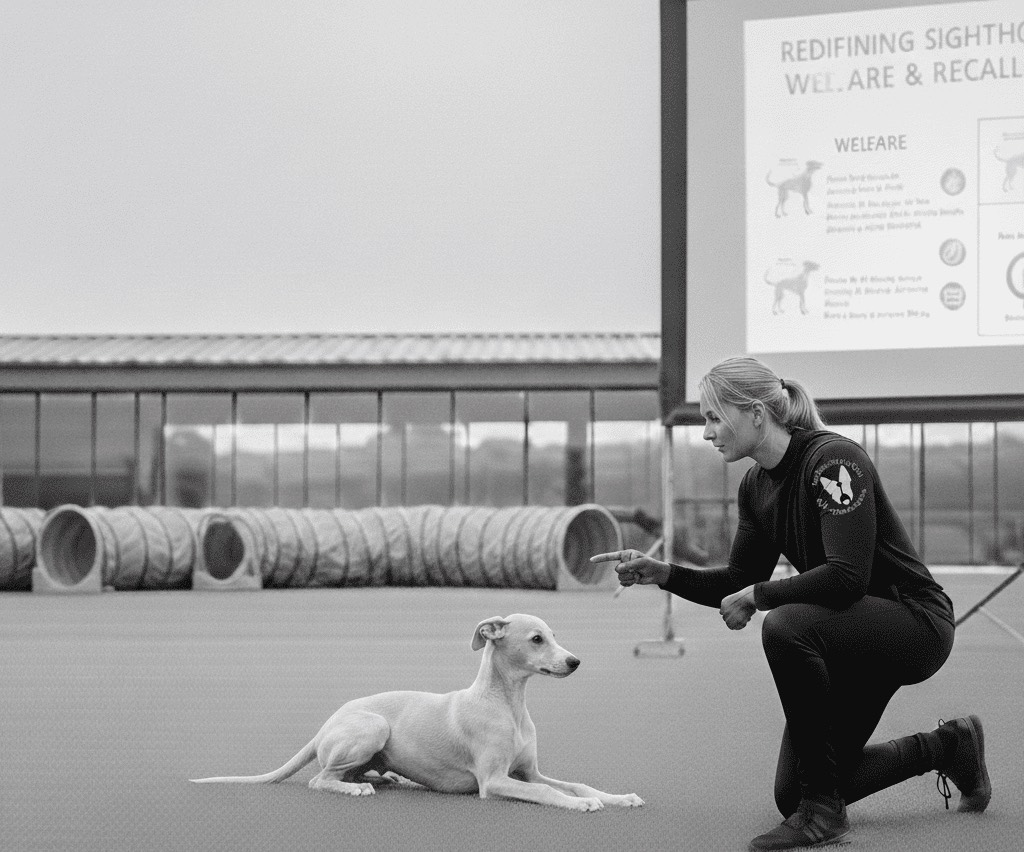
- Temporary Deafness: When a sighthound “locks on” to movement, the brain undergoes an intense shift. The visual cortex takes over, effectively throttling the auditory processing centers. The Physical Barrier: It is not a choice to ignore you; it is a physiological inability to process your voice. The Trainer’s Shift: Stop viewing the dog as “disobedient” and start viewing them as “mentally unavailable.”
𝐸𝑘=12𝑚𝑣2
. As velocity increases, the energy involved in a sudden stop grows exponentially.
- Tactile vs. Kinetic: A millisecond of low-level tactile stimulation (via a professional e-collar) acts as a physical “tap on the shoulder.” The Interruptor: The goal is to break the visual hyper-fixation before the dog reaches full speed, allowing the brain to switch back to a state where it can hear a command. Safety First: This is used as a preventative communication tool, not a punishment for running.
- The Argument for Freedom: Sighthounds are built for speed and expansive movement. Denying this expression can lead to secondary behavioral issues and a lack of fulfillment. The Modern Dilemma: Is the “Positive Only” label worth the physical risk of a long-line injury or the mental toll of permanent confinement?
- Acknowledge the Biology: Sighthounds enter a state of temporary deafness when triggered. Respect the Physics: Long lines can be more physically damaging than tactile corrections due to kinetic energy. Prioritise Fulfillment: True welfare involves finding safe ways to allow a dog to be what it was bred to be.
Step 1 of 11