First Aid
17 questions. Progress is saved on this device, so you can leave and return at any time.
Study Material
Use the material below as a foundation for deeper research, then confirm you have read it to begin the assessment.
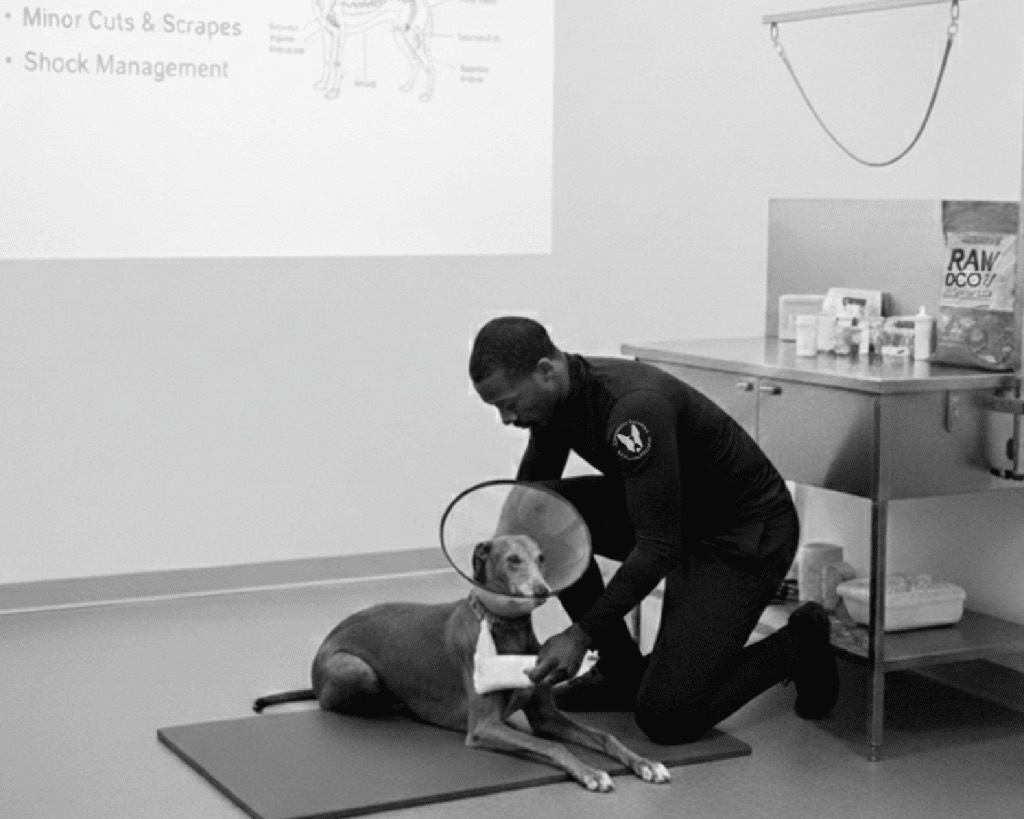
This course is a guide to providing immediate care to sick or injured animals. The goal of animal first aid is to stabilize the animal and prevent its condition from worsening before professional veterinary care can be administered. It is critical to remember that first aid is not a substitute for veterinary care , but a temporary measure to save or improve an animal’s life in an emergency.
Ensuring Safety The first and most important rule of animal first aid is to ensure your own safety . An injured or scared animal, even your own pet, may bite or scratch. Approach cautiously, speak in a calm, reassuring voice, and consider using a muzzle if the animal is in pain and you are certain it is not choking or vomiting. The “A-B-C”s of First Aid When you encounter an injured animal, use the following framework to assess its condition:
- A – Airway: Is the animal breathing? Is its airway clear? B – Breathing: Is the animal’s chest moving? Can you feel or hear breath? C – Circulation: Check for a pulse (typically on the inner thigh) and check the colour of the gums (they should be pink).
The Critical Role of a Veterinarian Always have the phone number of your regular vet and a local emergency veterinary clinic on hand. Call your vet first for guidance before, during, and after administering first aid. They can advise you on the best course of action and prepare for your arrival.
Bleeding and Wounds
- Minor Wounds: Clean the area with a saline solution or sterile water. Do not use hydrogen peroxide, as it can damage tissue. Apply an antibiotic ointment and cover with a sterile bandage. Severe Bleeding: Apply firm, direct pressure to the wound using a clean cloth or sterile dressing. If blood soaks through, add another layer; do not remove the first one. Elevate the bleeding limb if possible.
Fractures and Sprains
- Symptoms: Limping, swelling, pain when touched, or an unnatural angle of a limb. Treatment: Do not try to reset the bone. Keep the animal as still as possible. For transport, you can use a makeshift splint (like a rolled newspaper) to support the limb, but only if you know how to do so without causing more pain. The primary goal is to limit movement .
Burns
- Treatment: For thermal burns, immediately cool the area with cool (not cold) running water for at least 10 minutes. Do not apply ice. Do not apply any ointments, butter, or other home remedies, as they can cause further damage. Cover the burn with a clean, dry, non-stick dressing.
Choking
- Symptoms: Pawing at the mouth, frantic behaviour, difficulty breathing, or a blueish tint to the gums. Treatment: Look inside the animal’s mouth. If you can see the object and safely remove it with tweezers, do so. Do not push it deeper. If this fails, perform the Heimlich manoeuvre by placing your fist just behind the ribs and pushing up and forward sharply.
Heatstroke
- Symptoms: Excessive panting, bright red gums, lethargy, vomiting, or collapse. Treatment: Immediate action is vital. Move the animal to a cool, shaded area. Cool the animal with cool (not cold or ice) water, focusing on the ears, paws, and groin. Do not submerge the animal in cold water, as this can cause shock.
Poisoning
- Symptoms: Vomiting, diarrhoea, lethargy, seizures, or unsteady gait. Treatment: If you suspect poisoning, immediately call your vet or a pet poison control centre. Have the poison’s container or a description of the substance ready. Never induce vomiting unless instructed to do so by a professional.